Drunk Elephant Kids
A skincare trend involving pre-teens has sparked a lot of conversation online. At the center of it all is Drunk Elephant. It was once known for having clean, adult-focused products but Drunk Elephant has unexpectedly become part of a viral trend showing kids experimenting with multi-step routines. In this post, I’ll share my two cents as a licensed aesthetician on what parents should consider when it comes to age-appropriate skincare.
This post may contain affiliate links and professional skincare commentary. For full details, please read my disclaimer.
Drunk Elephant’s History
How It Started
Drunk Elephant launched in 2013 by the founder, Tiffany Masterson. She wanted skincare that delivered results that also didn’t irritate sensitive skin. This resulted in clean and effective skincare for adults. Its clean formulations, bright packaging, and clear instructions made it feel modern yet approachable and they quickly gained a loyal following.
The Shiseido Sale
In 2019, Japanese beauty giant Shiseido purchased Drunk Elephant for $845 million. The brand expanded rapidly, adding body and hair care lines and reaching international markets. With that growth came change and with that, some longtime fans started to notice a shift. The brand’s intimate, adult-focused feel was diluted by broader marketing campaigns and a push to appeal to wider audiences.
Drunk Elephant and the Social Media Trend
TikTok, Sephora, and “Sephora 10-Year-Olds”
By 2023 and 2024, TikTok overflowed with videos of teens and pre-teens experimenting with adult skincare. Some recreated multi-step routines from YouTube tutorials, while others filmed themselves in stores picking up products. Beauty YouTuber James Welsh highlighted the trend in a video titled “Sephora 10-Year-Olds and Drunk Elephant Need to Be Stopped.” He warned about the risks of children using adult products and questioned the growing culture of kids chasing skincare trends.
Ulta Employees
Instagram footage showed @ZACHFLU, an Ulta employee, speaking to a mother and her daughters. He explained that retinol is not designed for children and emphasized that parents should supervise purchases carefully. According to the caption, he was not aware he was being filmed at the time. The clip highlighted the importance of professional guidance when children are curious about adult skincare products.
View this post on Instagram
Rini and the Kids Skincare Controversy
Drunk Elephant isn’t the only brand facing scrutiny for marketing toward children. In 2025, Rini launched a line aimed at kids, featuring playful masks and gentle formulations. Even with a “kid-friendly” approach, the backlash was immediate. Pediatric dermatologists, parents, and online commentators questioned the need for structured skincare routines at such a young age. Many argued that framing skincare as necessary for children encourages adult habits too early, describing it as “disappointing” or even “dystopian.” Rini’s launch underscored a broader trend: youth-focused skincare is walking a fine line between playful marketing and societal pushback.
Why Dermatologists and Parents Pushed Back
Experts reiterated a simple truth: young skin doesn’t need exfoliating acids, retinol, or elaborate routines. Gentle cleansing, moisturizers, and sunscreen are sufficient. Parents noticed the trend not only online but in stores. Concern grew around potential irritation, breakouts, and the social pressure children face when trying to emulate adult beauty habits. Beyond skincare, the conversation revealed a larger issue — a culture that encourages children, especially young girls, to grow up too quickly, with social media acting as both accelerator and amplifier.
A Better Way: How Some Brands Responded
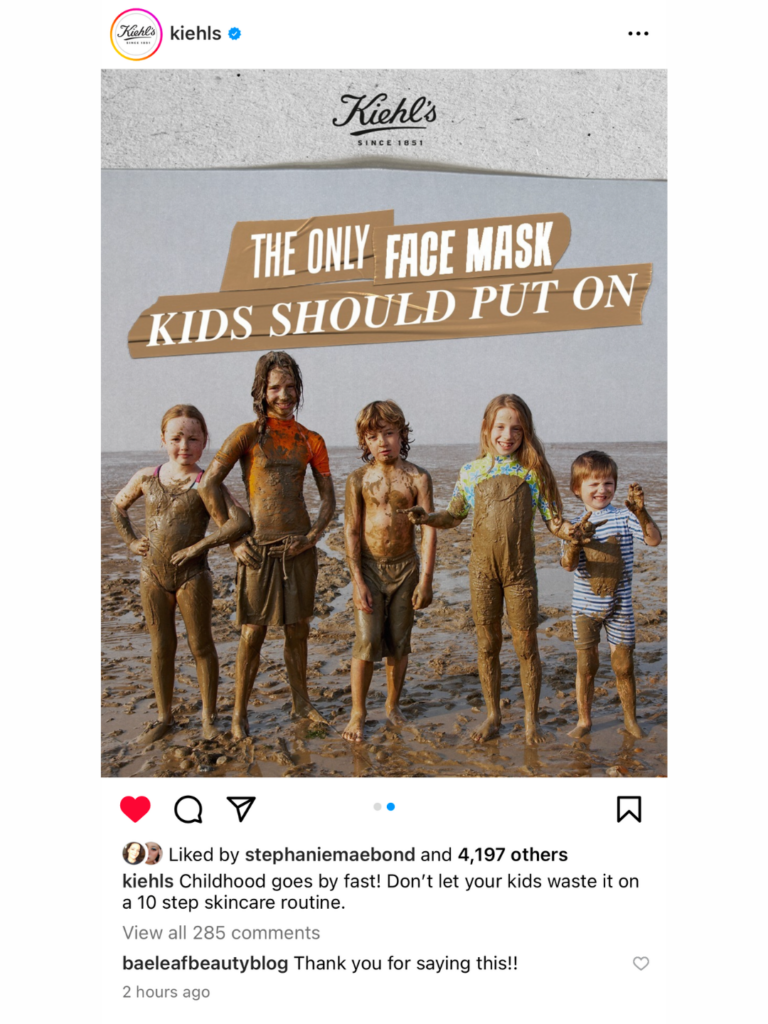
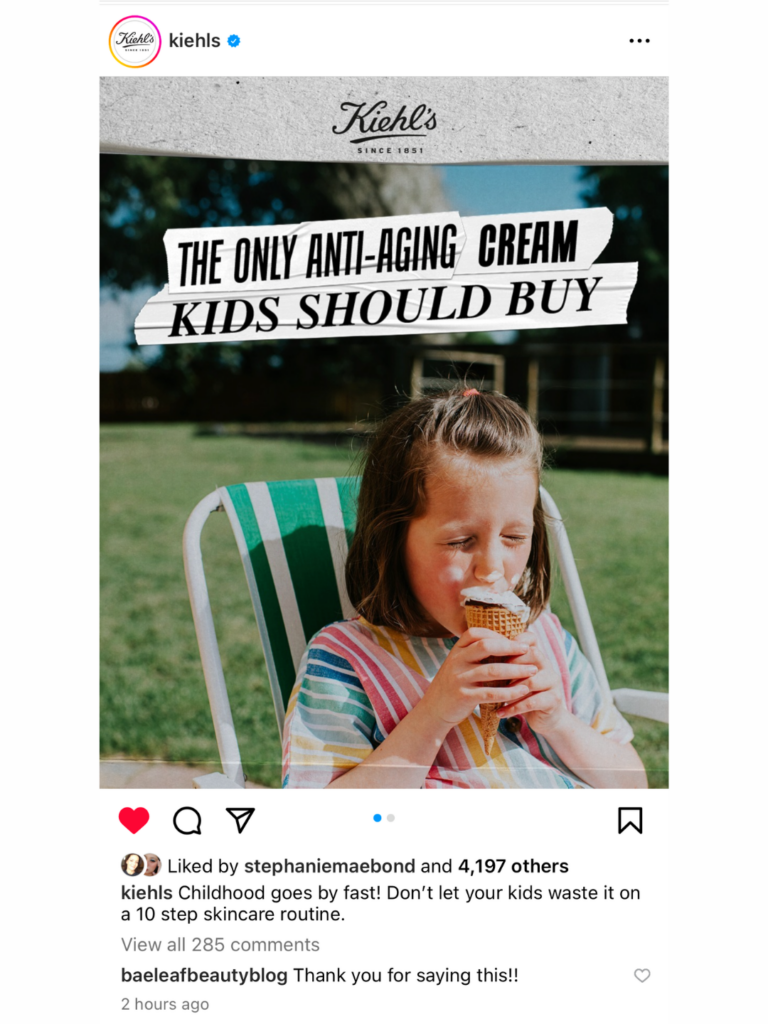
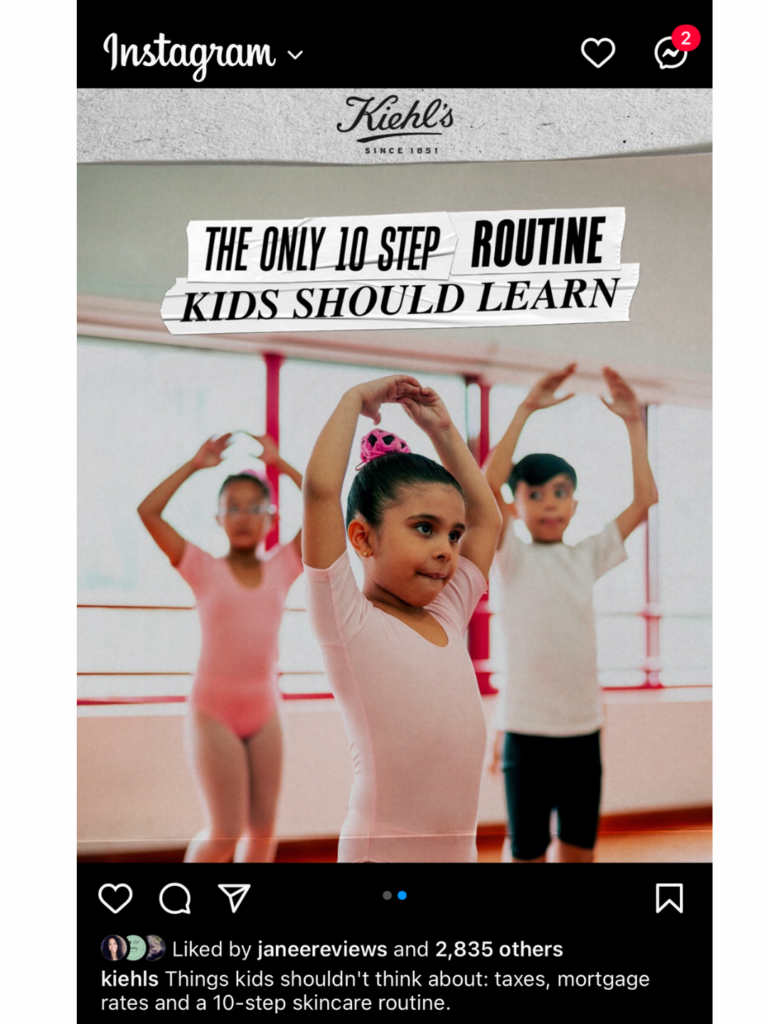
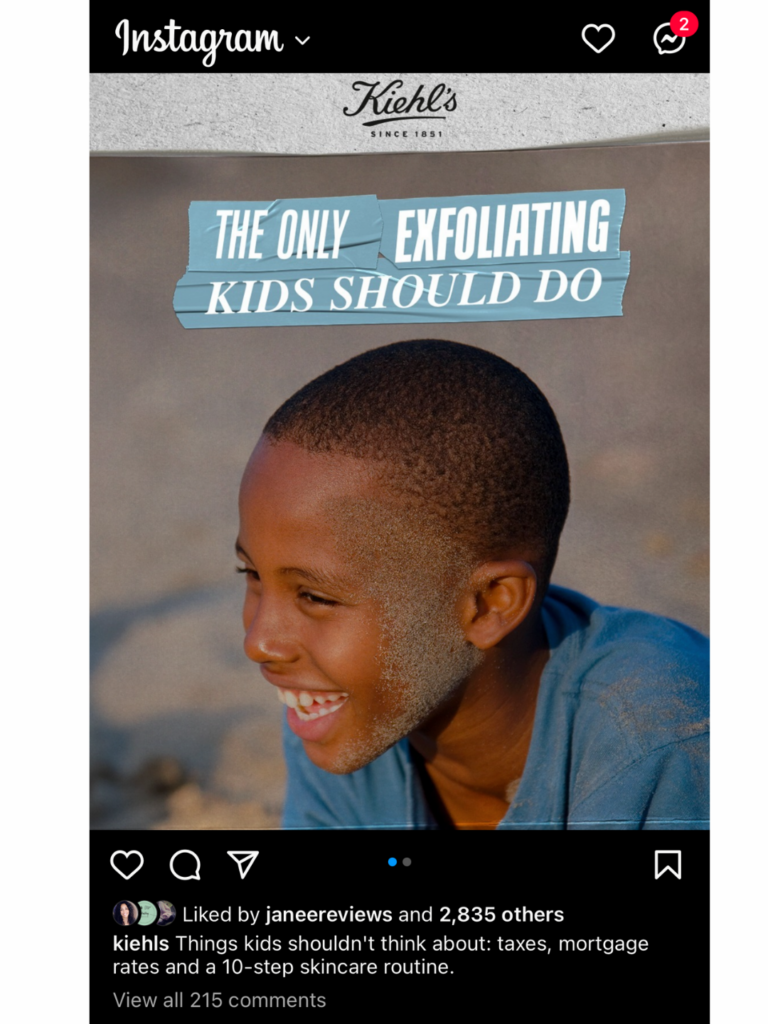
Some brands chose a more thoughtful approach. Kiehl’s, for example, leaned into playful, relatable messaging rather than pushing anti-aging products on children:
“The only face mask kids should put on? Playing in the mud.”
“The only anti-aging cream a kid should have? Eating ice cream.”
“The only 10-step routine a kid should learn? Ballet class.”
“The only exfoliating a kid should do? Playing in the sand.”
These campaigns reminded audiences that childhood should be imaginative, joyful, and free from adult pressures.
If you would like to shop and support Kiehls, you can shop my Sephora storefront here!
The Downfall of Drunk Elephant
The shift in perception had tangible consequences. In 2024, Drunk Elephant’s sales fell roughly 25%, and by early 2025, the decline deepened to about 65% year-over-year, affecting Shiseido’s U.S. results. The brand’s identity problem became clear. Adults who had once embraced Drunk Elephant felt alienated by the viral perception that it was now a trend for kids, highlighting the risks of unintended audience shifts in the age of social media.
What This Means for Beauty Culture
Social media doesn’t discriminate by age. Trends designed for adults can quickly reach children, and Drunk Elephant’s experience is a prime example. The controversy also underscores marketing responsibility. Brands must be deliberate in communicating what is age-appropriate while considering broader cultural impact. At a societal level, it’s a reminder to protect childhood. Children should be allowed to explore, play, and grow at their own pace. Adult-focused products belong to adults, and childhood should remain imaginative, not rushed.
The Takeaway
Drunk Elephant never marketed skincare for kids, but social media amplified the trend, and kids began experimenting with adult routines. In my professional opinion, it’s important to listen to dermatologists and for parents to carefully check products to ensure they are age appropriate. Children don’t need retinol or 10-step routines. They need gentle care, protection, and time to grow. Beauty should empower confidence, not enforce conformity. It should celebrate well-being, not pressure. Most importantly, it should allow children to simply be kids.
As of January 2, 2026, the majority of the posts have been removed from Drunk Elephant’s Instagram. There is a note in their profile that says they are rebranding. I can only hope that they have taken the feedback from their customers and parents and move forward in a positive way.